
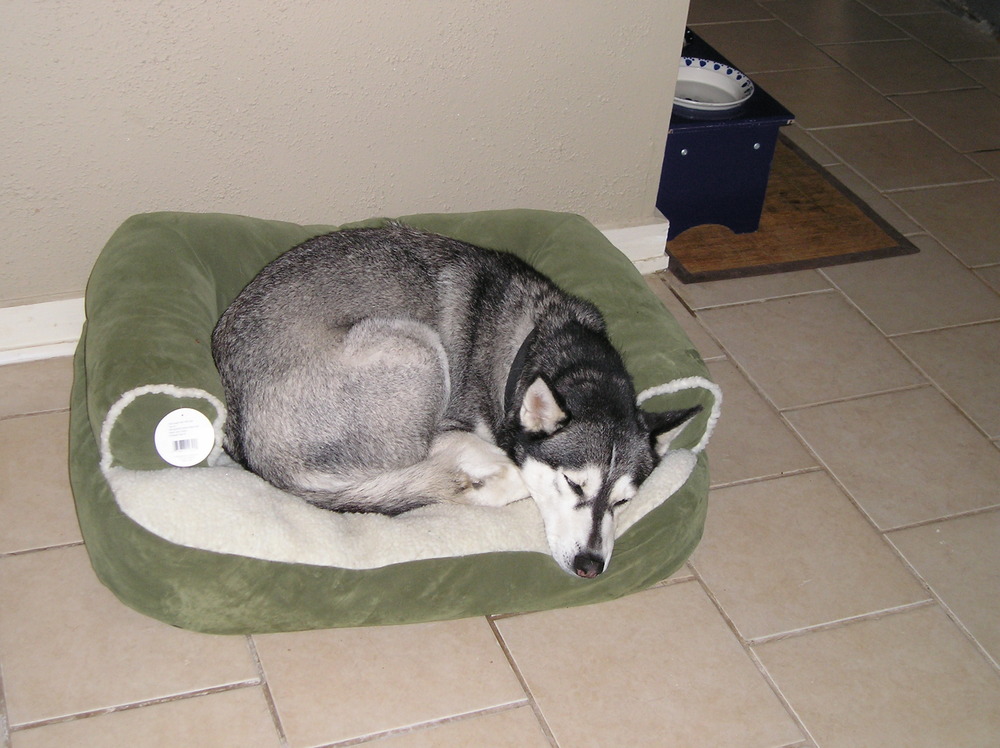
(Guinness, my Siberian Husky who sure knows how to sleep)
Have you ever said the title of this post out loud or have you even thought it to yourself? Of course you haven’t. Sleep is underrated. It is easy to fail to connect the dots between the amount and quality of our sleep and the effects that it has on our productivity, choices, appetite, exercise, weight, and overall happiness. Unfortunately, we also tend not to think that one can become significantly better at sleeping. This is simply not true.
In the 2008 book “Talent is overrated: what really separates world class performers from everybody else” the authors describe some of the key components to self-improvement. For example:
“The best performers observe themselves closely. They are in effect able to step outside themselves, monitor what is happening in their own minds, and ask how it’s going…Top performers do this much more systematically than others do; it’s an established part of their routine.”
“Excellent performers judge themselves differently from the way other people do. They’re more specific, just as they are when they set goals and strategies. Average performers are content to tell themselves that they did great or poorly or okay. The best performers judge themselves against a standard that’s relevant for what they’re trying to achieve. Sometimes they compare their performance with their own personal best; sometimes they compare with the performance of competitors they’re facing or expect to face; sometimes they compare with the best known performance by anyone in the field.”
“If you were pushing yourself appropriately and have evaluated yourself rigorously, then you will have identified errors that you made. A critical part of self-evaluation is deciding what caused those errors. Average performers believe their errors were caused by factors outside their control: My opponent got lucky; the task was too hard; I just don’t have the natural ability for this. Top performers, by contrast, believe they are responsible for their errors. Note that this is not just a difference of personality or attitude. Recall that the best performers have set highly specific, technique-based goals and strategies for themselves; they have though through exactly how they intent to achieve what they want. So when something doesn’t work, they can relate the failure to specific elements of their performance that may have misfired.”
In my experience, I have found these statements to be absolutely true. For example, it is quite common if not ubiquitous among serious athletes to record videos of their performance for subsequent review. This is important because 1) the tape doesn’t lie and 2) it is easier to see what is going wrong when you are not engaged in the activity. Both of these things point to objective assessment and improvement. I experienced this first-hand in a college course in which the professor taped our presentations and reviewed them with us. It was a really useful exercise to be able to see yourself say “um” about 200 times or to realize how much your had been fidgeting and how distracting it could be.
So, back to sleep. Have you ever tried to analyze or track how you have been sleeping? If sleep is important to you, consider how you might try to become the Michael Jordan, Tiger Woods, or Michael Phelps of sleeping. You might seek out information, training, or coaching on sleeping well. You might purchase some high quality sleep equipment (i.e., comfortable bedding, heavy drapes). You might keep track of how you are sleeping, what and where things are going wrong, and try to trouble-shoot those areas. I find that when I think of sleep as a sport or an activity at which I can improve, I approach sleep in a completely different way that gives it the importance that it truly deserves.
Sleep well,
Larry