
Ashley Tudor Interview, author of Sweet Potato Power
Sweet Potato Power
Several years ago, I met an inspiring health innovator named Ashley Tudor. Ashley is a Design Strategist who has worked with Fortune 500 companies and small start ups to develop solutions that tackle tough health-related issues, including the development of online tools to help people use food as medicine. Sometime between then and now, Ashley developed a writing bug, and recently published a new book entitled Sweet Potato Power: Smart Carbs, Paleo and Personalized. I recently had the chance to ask Ashley some questions about the book:
How did you come to write a book about sweet potatoes?
I’ve been a low-carb paleo eater for years. At the same time, my athletic pursuits-climbing, long distance running, crossfit-stretched my low-carb diet to its limits. I often found myself without enough ‘fuel in the tank.’ At the same time, I was involved with a local Quantified Self organization, a group that explores how to use self-tracking to positively impact various aspects of life. My diet was in need of some tweaking and the self-testing was a great platform for me to conduct my own experiments. Sweet Potato Power is an outcome of my own journey. It’s a book on sweet potatoes but it is also describes tools anyone can use to identify the diet that is best for them.

Ashley Tudor
Duke University estimates that 1 in 9 people will be 100 lbs over weight by 2030. This is really scary stuff. One tactic that has had a gained popularity is to cut carbs. How do you think the starchy sweet potato fits in to the health picture today?
The term ‘franken foods’ has been used to describe highly processed food products that have taken over the shelf space at most grocery outlets around US. Nearly 20,000 new food products are introduced every year. Most of these products are made from the same list of ingredient derived from staple crops (i.e., wheat, corn, soy). The crops are reduced down to refined ingredients (i.e., wheat flour, high fructose corn syrup, vegetable oil, etc), then built back up an endless array of “new products,” that get a fresh branding, usually showing a pastoral farm scene to make you think it’s natural and healthy; a highly disingenuous representation. Most of these products are very high in what I will call “bad carbs” – refined flours and fructose.
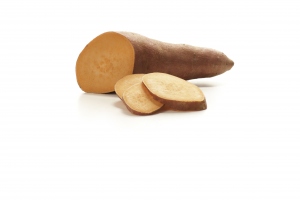
www.sweetpotatopower.com
As a result, carbs have gotten a bad rap as being the culprit to our health woes, including obesity. However, there are examples of cultures from around the globe that do have high carbohydrate intake and do not seem to experience the same health concerns that we face. In particular, starchy tubers - like the sweet potato - have a long history as an important, health-promoting food source. Sweet potatoes are a complex carb with a low glycemic load. For example, 100 grams of wheat bread delivers 3x the amount of carbs that 100 grams of sweet potato deliver to the body. They burn slowly in your system. They are low in fructose (which is toxic in excess) and may even prevent inflammation in the body. And they are really easy to incorporate into your diet. So, whether you are an athlete or someone who wants to replace the ‘bad carbs’ in life with good ones, the sweet potatoes should have a more prominent spot on the table.
The virtue of self-tracking is another component discussed in Sweet Potato Power, what made you interested to pursue this angle?
For years, our society has been touting exercise and calorie restriction as the way to address increased body fat, but we still get bigger and bigger! This strategy is not working, in my opinion. The age of the one-size-fits-all diet is over. People can reduce calories and still gain weight, and be skinny but unhealthy. There needs to be a better framework to understand our bodies. Self experimentation is key to discover what works for you. It’s not hard. You just need to know how. Sweet Potato Power helps you conduct your own tests.
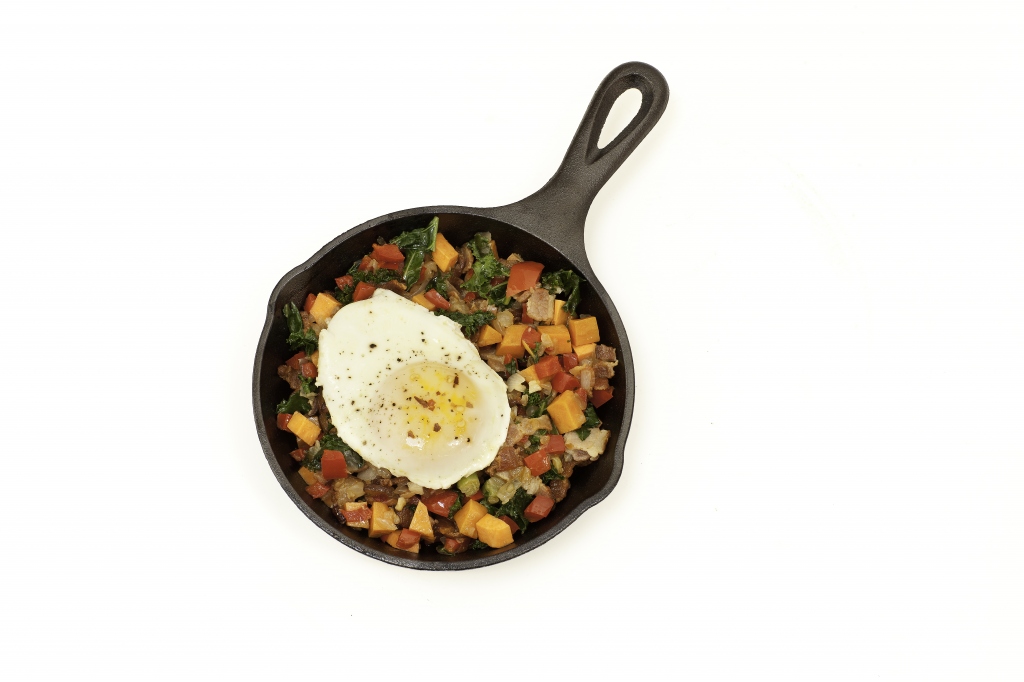
Sweet Potato Hash
One of the first things I noticed about your website and book is the beautiful food photography; tell us more about that and what are some of your favorite recipes?
Oh, that is hard. Sweet potatoes are SO delicious and versatile! Sweet Potato Hash after a Saturday workout satisfies refueling. For dinner, Sweet Potato Linguine for dinner is quick easy and a great base for any favorite pasta sauce. For the occasional sweet treat, I love Sweet Potato Bars. They are my new favorite gluten-free cake. Its hard for me to choose one favorite!
What would people be surprised to know about the sweet potato?
Back in the 16th century a sweet potato was worth more then their weight in gold. Clearly this was a time when people knew what these spuds where worth.
If you’d like to learn more Sweet Potato Power, check out her website, follow her on the Twitter at @ashleytudor, and her Facebook page, and get the book here.